

Is SEO Dead in 2026?
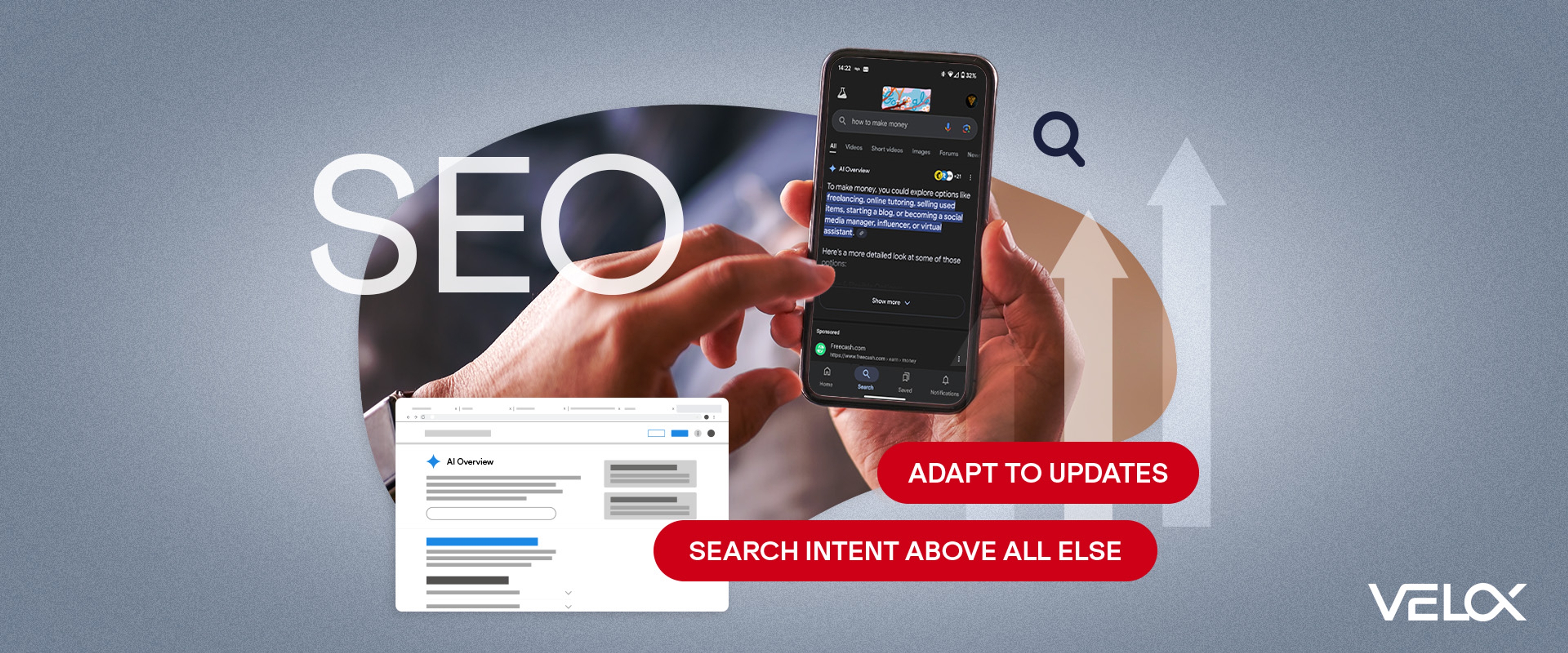

Every year, we see posts claiming that SEO is dead and Organic Search isn’t worth the investment.
But if this were true, why are brands still fighting for Organic Search visibility, and why is Google still the leader in search?
The truth is, SEO isn’t dead; it's just changed significantly. It’s now fragmented across various platforms and surfaces, and the metrics for success have evolved.
In this guide, we’ll cover:
- The state of Organic Search and Google SERPs in 2026
- AI’s continuing impact on SEO and digital marketing as a whole
- Organic Search best practices that still work
- Actions your brand must take to succeed in 2026.
The Current State of SERPs
In 2026, users research, discover, and interact with brands across various surfaces. But even with ChatGPT, Claude, and other tools gaining traction, Google is still the most visited website.
Search Engine Market Share - December 2025
- Google: 90.82%
- Bing: 4.03%
- Yandex: 1.56%
- Yahoo: 1.26%
- DuckDuckGo: 0.78%
- Baidu: 0.66%
From Search to YouTube, Gmail, Gemini, and Maps, people around the world depend on Google.
But the classic SERP experience has changed and expanded beyond 10 blue links. Instead of a page full of links, the modern SERP should be viewed as a results ecosystem, filled with dynamic features (AI Overviews, answer boxes, etc.) in addition to classic ranked links.
That means it’s more difficult for site owners to push their pages into those coveted top results, especially with so much real estate dedicated to paid ads, rich results, answer boxes, Google AI Overviews, and other elements.
Rankings are still crucial, but visibility, intent-matching, and format matter as well.
Competing in this new era requires building trust and authority, two things that have always been crucial for Organic Search success. It doesn’t matter if you’re trying to be found on Google Search or in a ChatGPT answer: If you aren’t a trusted source, there’s no reason to serve your content.
SEO fundamentals are still viable and can help your brand boost visibility and generate new sales.
AI's Impact on Organic Search
One of the primary reasons people claim SEO is dead is because of AI’s growth.
There's no denying AI’s advancements in recent years, and the user base continues to grow as these tools become part of daily life, with some even using them as search replacements (although the commercial impacts remain to be seen).
But here’s the truth: AI has been around for years, even before ChatGPT launched in late 2022, and Google started using the machine learning system RankBrain nearly a decade ago.
Whether you know it or not, we’ve been navigating disruptive AI impacts for a while. Adaptability is the key to digital marketing success, and ranking in AI search is no different.
With that said, AI is becoming increasingly prevalent in SERPs and elsewhere, evolving how digital marketers view SEO and define success.
Generative Engine Optimization (GEO), Answer Engine Optimization (AEO), and LLM Optimization (LLMO) are new tools to include in your overarching strategy. The primary purpose is to increase your brand’s AI visibility, so you can appear in AI Overviews, ChatGPT answers, and elsewhere.
The good news is that AI hasn’t disrupted the fundamentals of a sound Organic Search strategy. In fact, these same fundamentals fuel AI visibility.
Remember, these tools don’t replace the web. Instead, they synthesize responses using signals and sources they consider relevant and trustworthy. If your site is one of those sources, your brand is far more likely to appear in Gemini and ChatGPT responses.
As site owners, our goal is to create content worth sourcing and citing. Even as AI impacts Organic Search, traditional on-page, off-page, and technical SEO practices remain very much alive.
The 3 Pillars of Organic Search Success in 2026
Years ago, SEO success could be achieved with keyword stuffing and writing low-quality “good enough” content at a massive scale. Even many black hat SEO tactics “worked” in the sense that site owners could “trick their way to the top” of SERPs. Those days are over, and frankly, many of those same black hats are the quickest to pronounce SEO dead.
Today, authority and trust are the key differentiators between brands at the top of the page and those floundering at the bottom.
Thanks to algorithm updates and deeper guidance from Google, it’s never been clearer how to achieve stellar results. It all comes down to putting in the work and prioritizing the right strategies that align with your brand, website, and users.
Instead of implementing a single tactic, focus on these three pillars.
Quality
This should come as no surprise: Google rewards sites and apps that create genuine value for their users. The same is true for ChatGPT and AI tools. These platforms act as middlemen between users and the ideal content based on their queries and search intent.
That’s why delivering true, tangible value in everything you do is a must.
Quality can be defined in a number of ways:
- Providing genuinely useful content and a world-class site experience.
- Being specific with answers and information, backing it up with examples and evidence.
- Contributing new ideas rather than rehashing what’s already out there.
- Satisfying user intent, whether they’re seeking to learn something new or purchase a product.
These aspects apply to your content strategy, website UX, and anything else a user directly sees.
The proliferation of AI tools has led to a race to the bottom in terms of quality.
However, brands that skip the fluff and double down on “doing things the hard way” (i.e., put in the time to research industry trends, contribute expert analysis, and QA site UX) are in a better position to achieve Organic Search success.
Authority
Building authority has long been a goal for SEOs. Are you a brand people can trust? Do industry experts value your opinion? Can ChatGPT trust your content enough to serve it to users?
Authority is everything in Organic Search, providing the external validation search engines and AI chatbots need to feel confident when surfacing your content. For example, if you and a competitor publish content on a similar topic, authority signals are often used to determine which one is served or ranked higher.
That’s why, above all else, an informed, strategic link building campaign should be at the center of every Organic Search endeavor. It’s an authority-building driver that is especially valuable in 2026 when combined with other off-page SEO strategies.
Dos and Don’ts of Building Authority in 2026
- DO: Prioritize relevance, not just “authority metrics” when evaluating content placements.
- DO: Build repeatable topical relevance. You want to be the expert on a given topic or niche.
- DO: Leverage content syndication. When done effectively, syndication can strengthen your overall backlink profile, signaling to Google and LLMs you’re an authority in your industry.
- DON’T: Overemphasize single metrics like DA and DR. The goal is to earn backlinks on contextually relevant sites, not just high-DA sites.
- DON’T: Place links on pages whose only purpose is linking out to other sites. Focus on relevant, user-friendly pages and sites.
- DON’T: Treat authority building as a one-time event. It’s an ongoing effort to establish and grow your brand’s online authority.
Trust
Where authority emphasizes how Google and AI crawlers view your site, trust relates directly to your users. Trust is a key element of every conversion; someone trusts your website, product descriptions, and branding enough to type in their payment information. It really is that simple when you think about it.
“Trust” is directly visible in SERPs too, through reviews, ratings, forum sentiment, third-party commentary, and more. Users can now decide whether to trust your brand without even visiting your site.
You can’t fake trust. Either people think highly of your products, or they don’t, and any attempts to game the system through paid or fake reviews will hurt your reputation in the long run.
But even the most trustworthy companies struggle to rank highly. If you believe in your brand (as you should) and have the user feedback to support it, follow these tips to help expand your trust footprint.
- Keep branding consistent to avoid confusion and strengthen recognition.
- Introduce the people behind your brand with a clear story, author bios, and prominent contact information.
- Make your website feel trustworthy and safe with clean navigation, fast loading times, minimal pop-ups, and other technical SEO best practices.
- Keep it real with FAQs by actually answering real questions and addressing objections head-on.
- Utilize social proof and UGC to highlight what real customers say about your brand and products.
- Satisfy user intent by answering key questions and delivering content that supports the purchase decision.
- Be truthful and avoid overpromising or hype language.
How AI Is Transforming the Online Ecosystem
From a digital marketing perspective, AI’s greatest impact on Search so far has been the technology’s role in ranking organic results. This isn’t a recent advent, either. Google started using the machine learning system RankBrain nearly a decade ago.
But in Q3 2024, Google began rolling out AI-organized SERPs. The initial launch applied only to the recipe and meal-planning categories, and only in the U.S. But this move is widely expected to become a trend and gradually affect SERPs for all queries.
It certainly isn’t the only way Google is using AI to enhance Search; consider Google Lens, Circle to Search, and plenty of other ways to find what you’re looking for.
For most users, however, their most significant interaction with AI in Search is through AI Overviews.
AIOs are an enormous value-add, especially for those seeking only a quick answer to a specific question or surface-level background information on a topic.
Of course, for digital marketers, AIOs are eating up valuable real estate on SERPs, often pushing the top organic results below the fold and overall contributing to a rise in zero-click searches, which makes a brand’s visibility on such SERPs less valuable.
And that begs a critical question.
Will Organic Search, as a Channel, Survive AI?
With AI Overviews giving searchers most, if not all, of the information they need for certain queries and dominating prime space on the SERPs where they appear, publishers stand to miss out on crucial traffic.
So, if people no longer need to visit your site to benefit from your content, why would you even bother with Organic Search?
At this point, it’s still a hypothetical question and will hopefully stay that way.
The bottom line is that the future of AI as it relates to search, despite strengthening trends, remains to be seen.
SEO Has Never Been More Alive
Experience, Expertise, Authoritativeness, and Trustworthiness: As long as Google continues rating content based on these factors, SEO will be alive and well.
No doubt, Organic Search optimization is different in 2026, but that’s because Google Search keeps working to become its best self for the benefit of everyone.
While there are plenty of old Organic Search practices to abandon, there are also plenty of new tools and approaches that can help you thrive as Google keeps growing.
Organic Search Best Practices for 2026
- Create people-first, helpful content that answers questions, contributes new ideas, and provides clear information about your products/services.
- Improve AI visibility by creating content worth referencing with clear definitions, answers, next steps, evidence, and other elements that demonstrate authority on the topic.
- E-commerce businesses should consider selling through content. At the very least, ensure your product pages aren’t thin. They should include relevant, helpful details for your customers.
- Optimize for conversational intent, as the way people search for products is less keyword-focused than it was in the past.
- If you have a link building campaign already underway, keep at it. If you haven’t considered link building but want to take your digital footprint to the next level, there’s no better time to get started.
Organic Search optimization is far from dead, and a data-driven Organic Search strategy is one of the best investments digital marketers can make to crush KPIs and achieve tangible, long-term results.
VELOX Can Help Boost Your Organic Search ROI
Google keeps delivering new ways to search, but there’s no substitute for expert research and a tailored digital strategy to drive your organic growth.
As a Google Partner, VELOX stays ahead of the curve. Our team of SEO experts is ready to help grow your brand through an elevated keyword strategy, quality link building, and world-class content.
Contact VELOX today for an enterprise SEO audit to see how we can help your brand.