

A Beginner's Guide to Defining Buyer Personas
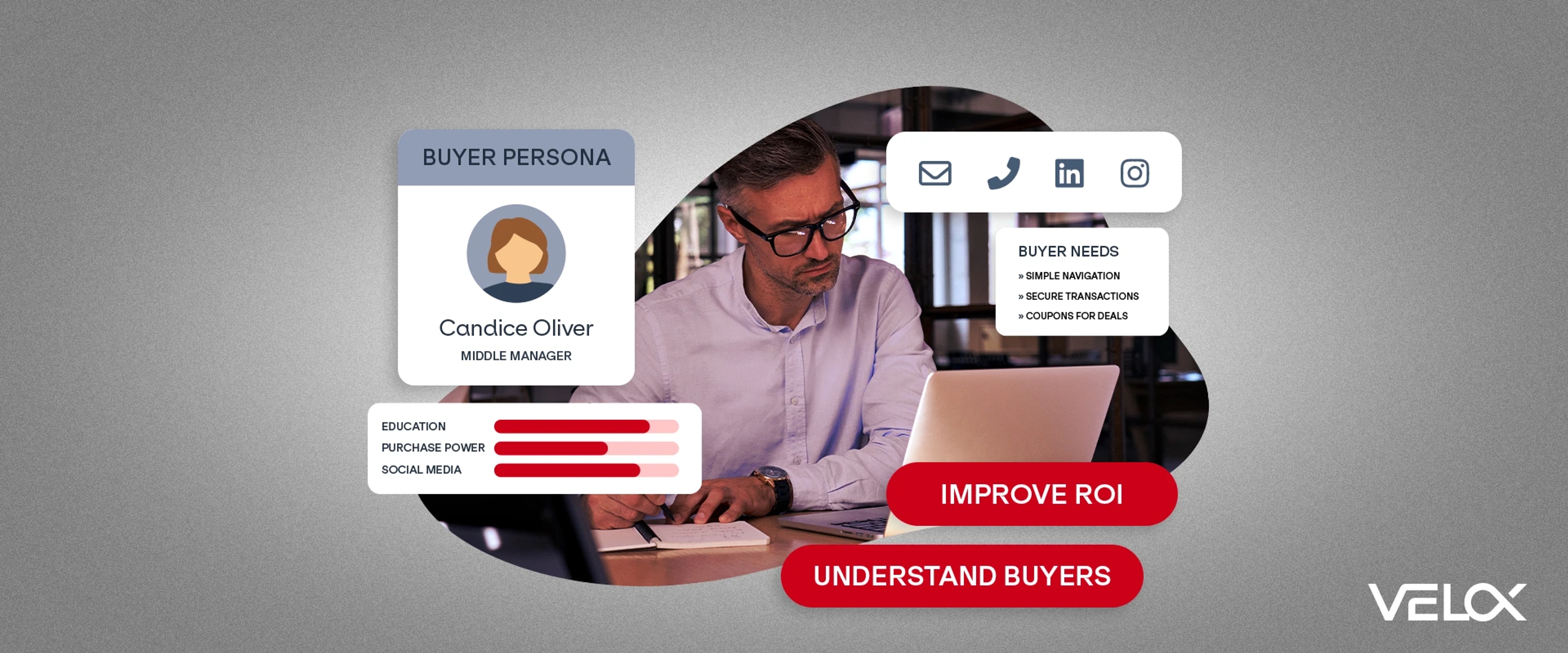

Understanding your target audience is key to boosting sales, reducing costs, and improving marketing precision.
That's why all businesses, big or small, need to develop buyer personas.
Think about it this way: If you ran a brick-and-mortar store, you could see who your target customers are. You’d know what they wear, how they move through the store, what they pick up and put back, and what they ultimately purchase.
You don’t have that luxury in e-commerce sales, but buyer personas help paint the picture of your ideal customers, so you know who you’re marketing to and how to connect with them.
Here’s what you need to know about buyer personas, how to create them, and how they can benefit your business from a revenue perspective.
What Is a Buyer Persona?
A buyer persona is a detailed overview of your most important customers. It features key demographic characteristics, interests, pain points, buying behaviors, media habits, and other details to help you fine-tune your marketing efforts.
While we’re all unique and have our own preferences and shopping habits, buyer personas can come pretty close to pinpointing your ideal customer, i.e., the people most likely to buy your products.
The key is using real-world customer data and marketing insights when developing your personas. This isn’t about guessing or assuming who is interested in your brand; it’s about knowing for a fact and investing fully in those personas.
You might assume there are only a limited number of buyer personas, but the more research and detail you put into each one, the more unique each persona can be.
For example, even if you and a competitor sell similar products, your buyer personas might be wildly different. It comes down to how you position your products and your brand and the type of people you attract.
While you might both sell running shoes and target men in their 30s, they might cater to an audience more interested in competitive races, while you attract more fitness-minded runners.
These small differences can significantly impact your messaging and channel strategy, which is why it pays (literally) to invest time and research into each persona.
Why You Need to Develop Buyer Personas
Developing buyer personas isn’t just a creative brainstorming exercise.
Customer personas can have tangible impacts on your bottom line and are key to driving your marketing strategy forward.
After all, if you aren’t talking to the right people, you’ll struggle to generate traction online. No matter how much you optimize your landing pages or how much money you put into a paid social campaign, if it doesn’t resonate with a target audience, it won’t convert.
Here are a few of the powerful ways buyer personas can benefit your company’s bottom line:
Refine Brand Messaging: Consumers want brands to speak their language. You need to understand their needs, pain points, and goals better than even they do. With data-backed buyer personas, you can refine your brand messaging to various audiences, making your marketing feel more personal and direct.
Improve Targeting Precision: If your paid media campaigns are delivering clicks but not conversions, your targeting could be the issue. With a precise buyer persona, you can improve your campaign targeting, ensuring you deliver ads to high-intent audiences most interested in your brand.
Boost Marketing ROI: With buyer personas guiding everything from your email marketing to your PPC and Organic Search campaigns, you can boost clicks, increase conversions, reduce CPAs, and improve your overall marketing ROI.
Inform Future Product Development: When developing your customer personas, you’ll learn a lot about your ideal customers, specifically their needs and pain points. You can use these insights to identify future product opportunities, anticipate your customers’ needs, and offer a solution ahead of time.
These are just a few reasons you need to develop buyer personas. When done well, buyer personas will serve as a guiding point for virtually all of your marketing efforts and have considerable revenue implications.
How VELOX Leverages Buyer Personas
Buyer personas are crucial to our paid search marketing and Organic Search content strategy services at VELOX.
We use buyer personas to:
- Align campaign messaging across all channels.
- Create Organic Search content to match customer preferences and search intent.
- Deliver hyper-targeted paid ads on the appropriate platforms.
- Reduce paid media costs and improve conversion rates.
One example is our work with Anatomie, a luxury travel apparel brand.
They partnered with us to differentiate themselves in the travel fashion space, improve ROAS, identify new customer segments, and cement their status as the top choice in luxury travel fashion.
Among their many personas, the top persona was the affluent, travel-savvy woman seeking premium apparel that felt as amazing as it looked.
We targeted this buyer persona in our Organic Search work and our Google Ads campaign management services.
By improving the brand’s targeting and messaging across channels, we delivered the following:
- New customers grew by 210%
- Google Ads purchases rose by 81%
- Over $300K in average new monthly revenue
- 8-9X ROAS
- 120% increase in top five Organic Search rankings
Those aren’t vanity metrics; they’re real revenue results that contributed to the brand’s success throughout the partnership.
This is the power of leveraging buyer personas to optimize your digital marketing efforts.
How to Create Buyer Personas
Developing buyer personas requires a data-driven approach.
You shouldn’t make assumptions about who you think is attracted to your brand and products.
Instead, follow the available data, leverage market research to fill in the gaps, and identify key trends and characteristics that separate your ideal buyers from the rest.
Here are the most important steps of the persona development process.
Step 1: Start with What You Know About Your Customers
- Audit existing customer data within your CRM, Google Analytics account, e-commerce platform, and social media reporting dashboards.
- Pay attention to metrics like purchase history, lifetime value, customer acquisition costs, conversion rates by segment, and user attributes.
The best place to start is with the first-party data available.
You might not realize it, but you’re already sitting on a treasure trove of data about your customers. Insights into conversions, average order value, cost per acquisition, and user attributes are key to developing your buyer personas.
With this data, you can get a clearer picture of who is buying your products. Fair warning: This information might contradict your predetermined assumptions.
However, this stage can feel overwhelming, especially when staring at spreadsheets of customer data. Don’t be discouraged! This is the messiest but most important part of the buyer persona development process.
Once you have all of your data in one place, you can start sorting through and identifying patterns and characteristics to create detailed personas.
Step 2: Leverage Market Research to Fill in the Gaps
- Dive deeper into your customers’ pain points and motivations through surveys, interviews, and third-party market research.
- Incorporate competitor research to find underserved customer groups.
Your existing data can only get you so far. Specifically, it might not provide personal insight into how your customers make decisions and what drives them to purchase.
Understanding these purchasing factors is crucial to building your buyer persona and driving conversions. After all, marketing is about addressing consumer pain points and offering a well-timed solution.
There are a few ways to go about collecting this information.
You can leverage existing third-party market research data to help you spot overall consumer trends within your industry segment.
You can get more personal and conduct interviews with your existing customers or invite site visitors to complete a survey about their opinion on your brand and products.
Competitor research can also be valuable in this stage. You can see what’s working for them, who they attract to their brand, and whether there are similar yet unfulfilled segments that fit your brand.
Finally, look to social media and customer reviews and see what people are saying. Whether in the comments section of your Instagram account or a subreddit related to your brand, you can glean valuable insights into who your ideal customers are and what makes them tick.
Step 3: Identify Patterns and Key Traits
- Create customer groups related to demographics and shared purchasing behaviors.
- Keep revenue at the forefront and focus on the insights that influence purchasing decisions.
It’s time to analyze all of that data and identify patterns and commonalities. After this stage, your ideal customers will be more apparent, and you’ll have a solid foundation for building personas.
While age and gender are important demographic insights to consider, they don’t always influence purchasing decisions.
For example, suppose two men in their 30s recently bought new running shoes. Did they have the same motivation or go through the same decision-making process? Probably not.
One is on his second pair in a year and preparing for an upcoming race, while the other saw a sale and decided to buy his first new pair in over two years. These are seemingly identical customers with wildly different characteristics.
If you overemphasize demographics, you’ll miss out on the key deciding factors driving people to purchase.
Instead, look for patterns and create segments related to behaviors, motivations, and objections.
Who makes the most repeat purchases? Which groups correlate with the highest average order value? What are common objections and barriers based on reviews and social media insights?
All of these factors will help you identify and prioritize the highest-value customers, so you can tailor your campaigns to reach them.
Step 4: Develop Individual Buyer Personas
- Create buyer personas for your most important customer segments
- Include a name, demographic details, information about their lifestyle, needs, pain points, and anything else to help refine your messaging.
After identifying key trends among your customers, you can now create buyer personas for your top customer segments.
You might have only one buyer persona, while others may have dozens. It’s all based on your business, the number of products you sell, and the audiences you naturally attract.
The key is emphasizing the highest-value, most-likely purchasers and creating a persona based on their unique attributes.
Here’s an example of a buyer persona for a running shoe brand:
Name: Dedicated Dan
- Demographic Information: 34-year-old male, mid-level professional, income $75,000+, suburban area, active lifestyle.
- Goals: Improve mile time while avoiding training-related injuries.
- Challenges: Finding shoes that balance responsiveness with cushioning; overwhelmed with the selection of products.
- Buying Triggers: Replacing worn-out shoes, upcoming races, and athlete endorsements.
- Objections: Skeptical about exaggerated claims of comfort or performance; high price points.
- Preferred Channels: YouTube, Instagram, online running forums.
You can practically picture Dedicated Dan based on this persona. That’s the beauty of it. You and the rest of your team will now have a clearer understanding of who you’re actually selling to, rather than a scatter-shot approach based on assumptions.
Step 5: Create Personalized Messaging Based on Your Buyer Personas
- Address pain points and motivations through your ad copy, brand messaging, and product descriptions.
- Fine-tune your channel strategy to meet your customers where they are online.
With clearly defined personas, you can tailor your messaging to speak directly to their goals, objections, and pain points.
This is where all of your hard work truly pays off. Now that you understand your ideal buyer, you can tailor your messaging to their motivations and objections. This is useful in everything from product descriptions to social media posts to Organic Search blog content.
You want your audience to feel like your brand truly understands them, and speaks directly to their wants, needs, and pain points.
Channel strategy can play a significant role in this. Even with the perfect messaging, your ideal buyer might not be on every channel, so you must ensure you’re reaching them where they are.
For example, if your running shoe customer researches new purchases mostly on YouTube, a paid Instagram ad won’t reach them. Select your channels carefully and continue optimizing your strategy based on the data.
How to Incorporate Buyer Personas Into Your Marketing Strategy
As mentioned earlier, creating a buyer persona isn’t just a creative brainstorming exercise.
You’ve done all of the work to create them, so it’s time to make your personas work for your brand.
Here are a few of the ways you can incorporate your buyer personas into your marketing strategy.
Paid Media
Boosting conversions, reducing costs, and improving ROAS are the goals of every PPC manager.
Buyer personas enable you to create hyper-targeted audience segments. Instead of casting a wide net, you can deliver ads to high-intent, high-value audiences based on specific channels, demographics, and behaviors.
Content Strategy
Once you’ve identified your ideal buyer, you can confidently speak their language in your content.
Use your personas throughout your content creation process. From blog posts to social media to videos, you can align your content to your personas. This helps you attract the right traffic and move them through the funnel.
Email Marketing
Want to increase email conversion rates? It’s all in the messaging.
You can use your buyer personas to create custom email sequences based on different segments. For example, first-time site visitors require a different approach than loyal customers. Consult your audience segments and, using your personas, craft messages and sequences that align with their needs.
Sales Development
If you have a sales development team, they need copies of your buyer personas.
These personas can help them better qualify leads and overcome objections. They can create specific talking points for various personas and address their pain points more effectively, presenting your business as the ultimate solution.
Put Your Personas Into Action with VELOX
Ready to make your personas work for your brand? At VELOX, we help clients get the most out of their marketing personas through hyper-targeted paid media campaigns and content strategy services that deliver Organic Search results.
Whether you already have buyer personas or need help identifying new audiences, we’re here to help.
Contact us today to learn more about our award-winning digital marketing services.