

Leveraging First-Party Data for a Cookieless Future
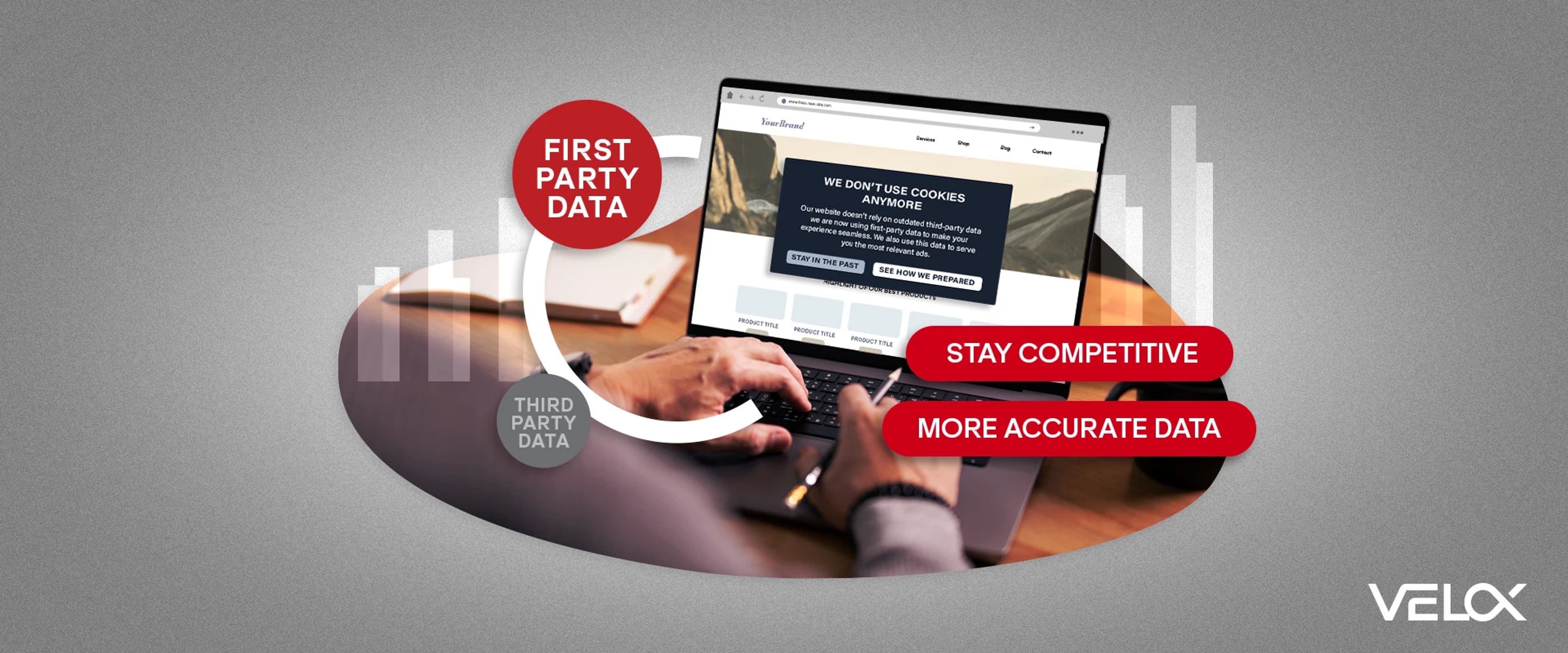

Even though Google has decided to keep third-party cookies on Chrome, it doesn’t mean they’ll always be around. After all, Google has been known to change its mind in the past, and you can’t rely on yesterday’s strategy to stay competitive in the future.
Plus, first-party data presents more opportunities for brands, so it’s worth transitioning to this data type sooner rather than later.
Let’s take a closer look at the key differences between first-party and third-party cookies, the future of cookies on Chrome, and how to leverage first-party data in your Organic Search and paid media campaigns.
Is Google Getting Rid of Cookies on Chrome?
The short answer: Not in the near future, as far as we know.
After years of going back and forth, Google announced in summer 2024 that it was keeping third-party cookies in Chrome for now.
While they’d originally planned to roll out their proprietary alternative Privacy Sandbox, the search giant seemed to receive negative feedback from publishers, users, and most importantly, regulators who are already looking closely at Google’s platforms.
But just because third-party cookies are safe for now doesn’t mean they always will be.
Users are becoming increasingly privacy-conscious, and Google is making it easier to disable and manage cookies on Chrome.
To top it off, Chrome is one of the few browsers that does not disable third-party cookies by default, so if someone is using Safari, Firefox, or something else, they likely have them turned off anyway.
This all paints a clear picture: Third-party cookies won’t be around forever, so brands need to start collecting and leveraging first-party data in their marketing efforts now and in the future.
First-Party vs. Third-Party Cookies: What’s the Difference?
The primary difference between first-party vs. third-party cookies comes down to origin and objective.
Third-party cookies are placed by a third party and track users across the web. Their primary purpose is for advertising and tracking, collecting data on the various sites a user visits, and feeding that information into advertising networks. This data is passed along from one site to the next, so a third-party domain can track a user throughout their browsing journey.
If someone shops for running shoes and then sees an ad for those shoes a week later on a completely unrelated platform, that’s third-party cookies at work.
While cross-platform tracking and targeting make our jobs as marketers easier, users are becoming more aware and concerned about them.
Meanwhile, first-party data is collected by the domain a user visits, typically after the user opts in. The site also places a first-party cookie, typically to make a user’s experience more seamless, like saving their login preferences or their shopping cart.
First-party data and cookies are more user-focused, privacy-friendly, and provide real value for brands that implement them correctly.
What Are the Benefits of First-Party Data?
Even if Google decides to keep third-party cookies in Chrome forever, you should seriously consider proactively switching to first-party data.
That’s because it offers tangible benefits that third-party cookies just can’t match.
- You already own it: You collect customer data every single day through website visits, purchases, phone calls, and other sources.
- You have exclusive access: Your customer data is your customer data, which is something your competitors don’t have.
- It’s more accurate: No more guessing or working with vague customer profiles. First-party data helps provide a clearer picture of your ideal customers.
- It’s future-proof: We don’t know what the future holds, but third-party cookies are clearly on their way out.
- More privacy-friendly: Users overwhelmingly prefer transparency and privacy when browsing online, and first-party data is more privacy-friendly than third-party cookies.
The best part is that collecting first-party data isn’t especially challenging, so long as your brand is transparent and incentivizes customers to provide their data.
In fact, a recent study found that 90% of consumers are willing to share their data when presented with the right value exchange.
This could be through loyalty programs, discounts, exclusive first access to new products, or other incentives that make it worth giving up an email and allowing a cookie.
But having this data isn’t enough; you need to leverage it in your paid media and Organic Search efforts to achieve real revenue growth.
How Can Marketers Leverage First-Party Data?
So, what can you do with all of this data? Quite a bit, actually, and first-party data-driven campaigns can yield better results for brands and users alike.
Make Your Campaigns More Personal
First-party data collected from newsletter signups, purchases, surveys, and other sources can help you better understand your customers.
This goes beyond gender and age and can help you fine-tune your customer profiles so you can further tailor your messaging to match your customers.
Using a CRM or other platform, you can organize and categorize this data and use it to create more personalized and targeted ads, landing page copy, social media posts, blog posts, and other content.
Optimize Paid Media Campaigns
Effective paid media campaigns rely on precise targeting, careful budget management, and leveraging the latest features to reach the right audience at the right time. First-party data can play a critical role in every aspect of your paid advertising campaigns.
For starters, you can upload this data to target your ads to your audiences using Customer Match in Google Ads. This allows you to re-engage with your customers across various platforms, while also finding similar audiences online.
Additionally, you can use first-party data for A/B testing of ad copy, ad creatives, keyword targeting, and more. For example, VELOX employed this strategy within Thrive Causemetics’ paid media campaign to drive a 302% surge in revenue.
With this data, you can fine-tune your ad experiments and target higher-value audiences much quicker, especially if you feed the data into a Performance Max campaign.
Increase User Acquisitions
If you want to increase your customer acquisitions, you need to speak their language. First-party data is key to better understanding your audience so you can create highly specific segments and further research each segment's individual characteristics.
With better insight into your customers, you can create more targeted campaigns that reflect their habits, behaviors, and preferences, improving your acquisition efficiency.
You’ll waste less time (and money) on shoppers who haven’t shown as much interest in your brand as other high-value, high-intent audiences.
Improve Your Site’s User Experience
Your website’s user experience matters for your customers, your brand image, and can even impact your Organic Search rankings. That’s why improving and continually optimizing your site’s user experience should be at the top of your list.
There are plenty of user experience best practices, but beyond those, you can leverage first-party data to see how your audience interacts with your site, identify bottlenecks, and create content that better speaks to their needs.
We utilized this strategy in Democracy Clothing’s paid media and Organic Search campaign to achieve 1,653% revenue growth.
One of the brand’s challenges was consistently producing engaging, high-quality content in its trend-driven vertical. Utilizing first-party data and advanced audience insights, VELOX was able to create targeted content that accurately reflected their audience while streamlining the buyer journey through on-site optimizations.
There’s no such thing as a perfect user experience, but first-party data can help you optimize your site to ensure each user’s experience is as seamless as possible.
Future-Proof Your Digital Marketing Strategy with VELOX
Third-party cookies are on their way out, and brands that capitalize on their first-party data stand to see the biggest gains in the near future. VELOX helps brands navigate the ever-changing digital marketing landscape so they can expand their reach, improve their Organic Search rankings, and increase their revenue growth. From our paid media services to our on-site technical support, we can help you optimize your marketing funnel from top to bottom.
Get in touch with VELOX today to learn about our award-winning paid media and Organic Search campaigns.