

The Digital Marketer’s Guide to Google AI Mode
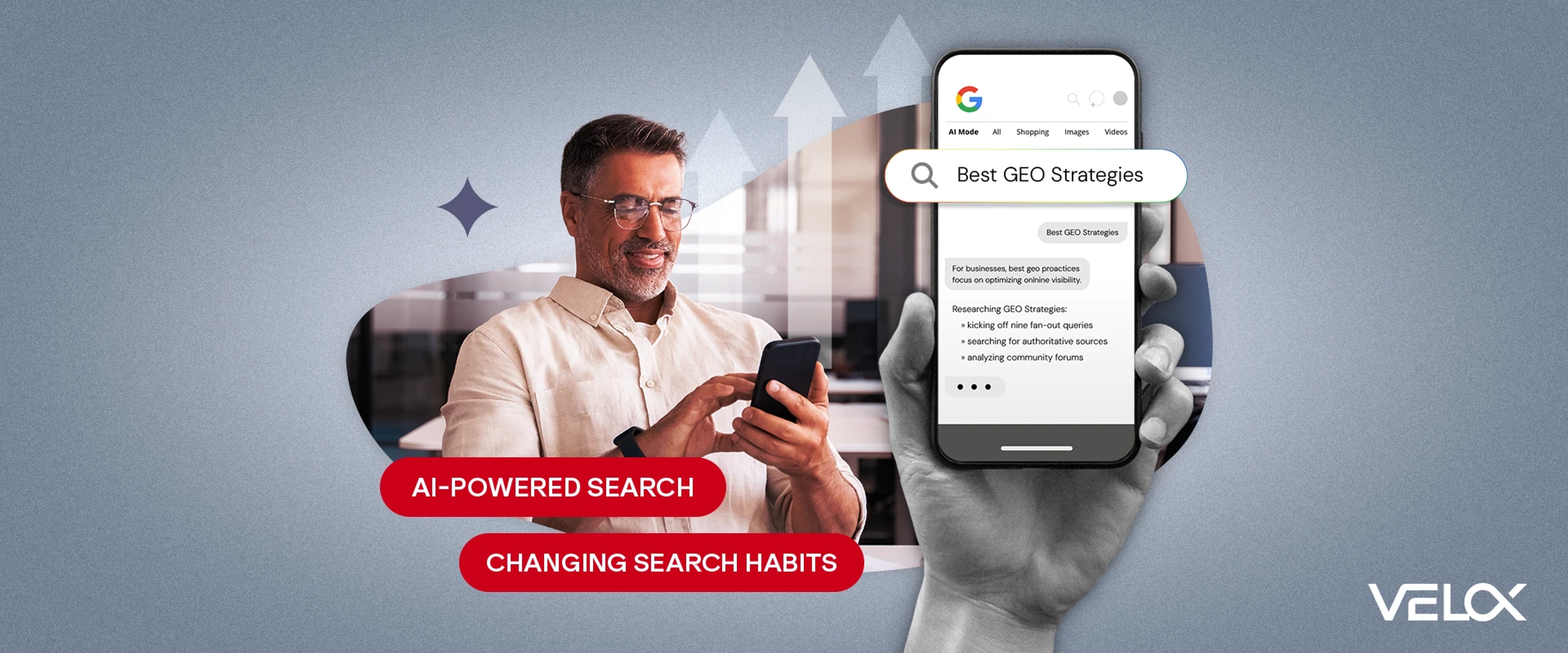

AI is revolutionizing search. Thanks to conversational responses, concise answers, and personalized search experiences, an increasing number of people are turning to AI tools to discover new products, find local businesses, and learn about various topics.
Google AI Mode graduated from Search Labs in May 2025 and has been gradually rolled out worldwide. As the world's largest search engine adopts AI-powered search, it’s time for marketing teams to follow suit.
What is Google AI Mode, and how will it affect your digital marketing strategies now and in the future?
What Is Google AI Mode?
Google AI Mode is an experimental feature within Google Search that provides a more sophisticated, conversational experience compared to traditional Search.
It has a similar format to ChatGPT and other AI tools, with a focus on summarizing and citing direct sources from the web. With the significant investment Google has made in AI Mode, it’s clear that they view it as a core part of the search engine’s future.
Here’s how Google Search and Google AI Overviews compare to Google AI Mode.
Google Search
- SERPs feature paid ads and a ranked list of links.
- Intended for simple, keyword-driven queries.
- While AI has come to the forefront only recently, machine learning and AI have long been a part of Google Search. For example, Google began providing AI-organized search results when it introduced its RankBrain system in 2015.
- AI in Google Search is used to generate results based on relevance, quality, user intent, and other nuanced factors.
Google AI Overviews
- Large language models (LLMs) interpret complex queries and synthesize information from across the web.
- Appear at the top of Google SERPs for informational queries, or when Google decides an AIO is the best way to satisfy the user intent.
- AIOs pull information that might not rank in the top 10 search results using fan-out queries.
- They contain citation links embedded within the response and a list of sources on the right-hand side.
Google AI Mode
- Uses advanced LLMs and fan-out queries to interpret complex, longtail queries and synthesize large amounts of information.
- Provides a conversational, concise response.
- Allows people to dig deeper with follow-up questions.
- Offers multiple search options, including text, voice search, and image search.
- Provides a more personalized experience thanks to AI Mode History, which learns from previous queries, similar to competing AI platforms like ChatGPT, Perplexity, Claude, and others.
Think of AI Mode like a more advanced version of traditional Search, providing users the ability to go deeper, ask more complex questions, and discover new information without leaving the Google domain. It has the potential to disrupt Organic Search in numerous ways, leaving marketers feeling both anxious and excited, depending on their perspective.
How Is Google AI Mode Changing Search Habits?
AI-powered search can interpret and generate results for longtail queries, setting tools like Google AI Mode apart from traditional search. Let’s use a real-world example to better understand how generative engines are changing the way people search.
The Situation
Dave is hosting a catered networking event for local business owners. He needs to find a reliable corporate catering service in his city and choose meals that accommodate various dietary preferences.
The Search
With traditional Google Search, finding the perfect caterer would require multiple short, keyword-driven searches and clicking through various search results.
Google AI Mode, on the other hand, can interpret longtail queries and condense large amounts of information into a useful, intent-driven response.
The Solution
Instead of searching “corporate caterers near me” and “best boxed lunches for vegans”, Dave simply explains his situation to Google AI Mode.
Google AI Mode uses advanced LLMs to understand Dave’s search intent and performs fan-out queries to help him find the perfect caterer for his event.
The Future
This is already a more convenient and streamlined way for Dave to find a caterer, but Google has even bigger plans for AI Mode. Google Labs is currently exploring agentic features, meaning that Google AI Mode will soon be able to conduct the research and the legwork.
Agentic features would enable Google AI Mode to take customers like Dave directly to a booking platform that meets their needs, whether they’re placing a catering order or booking plane tickets.
As we can see, Google AI Mode is an incredibly convenient and intuitive way for users to search. This is great for Dave, but what about the catering companies in his city?
If you’re looking at this example with the mindset of a digital marketer rather than a consumer, you’re probably wondering a few things:
- Dave didn’t click through multiple websites during his search. How does AI-powered search impact brand visibility, click-through rate, organic traffic, conversions, and revenue?
- Dave’s query wasn’t driven solely by keywords. How does AI Mode select businesses to recommend, and how can I ensure it chooses my site?
- Soon, Dave will be able to book a caterer without ever having to visit a website. How can I optimize my marketing strategy for a future dominated by zero-click searches?
Generative AI is doing more than changing the digital marketing playbook; it’s rewriting the rules altogether.
Let’s break down these questions to better understand how digital marketers can optimize for this new search feature.
How Can Digital Marketers Adapt to AI-Powered Search?
Optimizing for generative search engines, or GEO, should be a priority for every marketing team. Being early is the key to capitalizing on any emerging trend or technology, which is why now is the time for marketing teams to invest in GEO strategies.
Here are three ways digital marketers can optimize their content for Google AI Mode and other generative search engines.
Reframe Your KPIs
Digital marketers typically gauge campaign success on keyword rankings, click-through rates, and organic traffic. Google’s AI Overviews and AI Mode are streamlining the search experience and changing how people interact with search results, making zero-click searches the norm.
These traditional performance indicators are still important for tracking the ROI of your Organic Search strategy, but understanding emerging KPIs can give companies a competitive edge. As zero-click searches become more prevalent, the industry is adopting new visibility metrics such as:
- Chunk Retrieval Frequency: How often a chunk of your content is featured in AI-powered search results.
- Zero-Click Surface Presence: How frequently your brand is mentioned or content is cited in AI Overviews and responses that don’t provide links.
Combining Organic Search and GEO content strategies can help your brand maintain visibility and generate results even with a rise in zero-click searches.
Build Brand Authority
There’s roughly a 50% overlap between domains cited by Google AI Mode and sources that rank in the top 10 on Google Search. Community forum sites, credible domains, and niche publishers are often cited in generative search responses.
This tells digital marketers two things:
- Traditional SEO best practices that boost Google Search rankings can still help businesses appear in AI-powered search results.
- AI-powered search features like Google AI Mode look for authoritative sites when choosing sources.
The bottom line: Being an authoritative, credible voice in your industry is still the primary goal. By creating compelling content, earning mentions from other platforms, and maintaining a consistent brand image and messaging, you can set your brand apart in the eyes of users and AI.
Create Citation-Worthy Content
As AI-generated summaries and conversational responses replace traditional SERPs, citations are becoming the new page rank. Digital marketers aren’t just competing for clicks anymore; they’re also competing for credibility.
For Google AI Mode to trust your website enough to cite or recommend it, your team needs to create content worth quoting. Google’s 2022 Helpful Content Update rewards content that does more than sell a product, so savvy digital marketing teams should create informative content.
Human-centered, high-quality content structured for readability is essential for businesses that want to earn the trust of Google AI Mode.
The best ways to create citation-worthy content are to prioritize:
- Google E-E-A-T: This acronym stands for Experience, Expertise, Authoritativeness, and Trustworthiness. Your site must meet all of these standards to earn Google AI Mode’s trust.
- Conversational Language: Your content should be easy to digest. Avoid using jargon, clearly highlight key takeaways, and link to sources that support your claims.
- Technical SEO: Your site needs to be easy to navigate for it to be worth citing. A clean user experience and optimized landing pages go a long way.
With this information in mind, let’s revisit our real-world example from the perspective of a corporate catering company hoping to earn Dave’s business in an AI-powered search landscape.
The Search
In addition to implementing an Organic Search strategy that helps their website rank for high-volume keywords, this business implements GEO best practices.
Since their website has a consistently updated blog, their brand is mentioned in community forums, and their landing pages offer a great user experience, it’s easier for Google AI Mode to find and reference their services.
The Solution
Thanks to these Organic Search best practices, this catering company ranks in the top 10 for keywords related to Dave’s catering search, boosting their chances of being cited in AI Overviews and Google AI Mode.
Additionally, by implementing Generative Engine Optimization strategies, Google AI Mode’s fan-out queries notice their brand, and Google’s LLMs recognize it as a credible, authoritative source worth citing.
The Future
Since this catering company has invested in technical SEO, Organic Search, and Generative Engine Optimization, Google AI Mode’s agentic features can take Dave directly to their online booking platform.
Ready to Modernize Your Marketing Strategy?
Google AI Mode and other generative engines are reshaping search habits and digital marketing strategies. The brands that are quick to adapt to these changes will set themselves up for success. However, the window for early adoption of GEO strategies is quickly closing.
It’s time to sharpen your digital marketing strategy with an innovative, ROI-driven approach. We’re here to help. Contact VELOX Media today to learn how our proprietary strategies and high-quality content creation can help your brand excel in an AI-driven market.